Scale of Enemy Attrition: The Guardian Discloses Data on Russian Military Casualties
Analysis of leaked registry data indicates a sharp rise in mortality among Russian military personnel and a slowdown in offensive momentum.
 👥Society
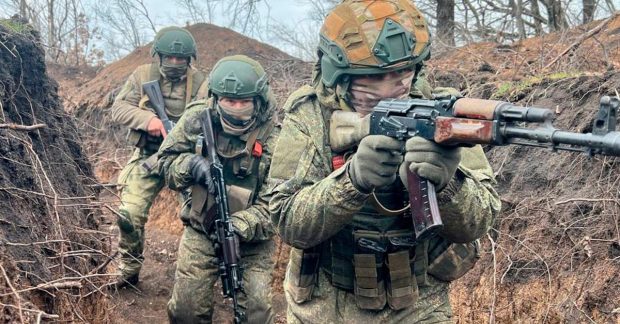
Photo: UNIAN
Key points
- Over 460,000 combat fatalities recorded in leaked Russian registries.
- Heavy casualty concentration reported in the Pokrovsk sector.
- Average age of fallen enemy personnel increased from 34 to nearly 40.
The British publication The Guardian has released a report based on leaked data obtained by the Cyber Partisans hacking group, indicating that total recorded combat fatalities among Russian forces since the start of the full-scale invasion have exceeded 460,000. According to the registry records, participation in hostilities became the primary cause of death for Russian men under 65, accounting for 29% of all recorded cases.
Escalating Fatality Trends and Critical Sectors
Analysts highlight a steep upward trajectory in death rates within the invading forces over recent years. While the registry documented approximately 20,000 fatalities during the first year of the invasion, that figure rose to 50,000 in 2023. In 2024, recorded Russian military deaths surpassed 134,000, reaching 200,000 in the subsequent period. The highest concentration of losses occurred during intense combat in the Pokrovsk district, specifically around Avdiivka and the Pokrovsk-Myrnohrad agglomeration, where nearly 116,000 Russian soldiers were killed.
Journalists note that actual casualties may be significantly higher, as missing personnel are omitted from active registry counts and formal death declarations are often delayed. Additionally, the report notes over 7,300 deaths among foreign recruits fighting alongside Russian forces.
Demographic Shifts and Personnel Shortages
Experts observe a noticeable rise in the average age of deceased soldiers. While the average age was 34 at the beginning of the full-scale war, it later approached nearly 40 years, with individuals over 50 making up almost 20% of casualties. This trend suggests reliance on financial incentives that primarily attract older recruits from poorer regions.
"Absolutely horrific losses combined with slower recruitment rates have clearly forced Russia to slow down its attacks," noted Janis Kluge, a Russia expert at the German Institute for International and Security Affairs.
Commenting on the broader dynamics, Ukrainian MP Fedir Venislavskyi previously noted that severe imbalance in battlefield attrition forces the adversary to rely on hidden mobilization and foreign recruitment drives.
Source UNIAN — unian.ua/war/viyna-v-ukrajini-rosiya-vtratila-ponad-460-tisyach-viy… ↗
Read next
 🏙️City
Icy roads: meteorologists warn of danger on November 25
The Ukrainian Hydrometeorological Center has issued a Level 1 weather alert due to icy road conditions in Kyiv and the surrounding region.
 🚌Transport
Fuel prices in Ukraine are falling: experts predict further decline
Over the next 7-10 days, the cost of gasoline and diesel fuel at Ukrainian gas stations is expected to decrease by another 6-7 hryvnias.
 💼Economy
Putin threatens retaliation for attacks on Russian oil refineries
Vladimir Putin claimed that Ukraine continues to target Russian refineries despite US requests, promising a response.
 💼Economy
How to prepare for the New Year holidays in Pryluky wisely: saving tips
Preparation for the New Year holidays is often accompanied by significant expenses. Experts recommend planning a budget and avoiding impulsive purchases to save money.
 🏛️Politics
Debate over accountability of anti-corruption bodies: absence at the parliamentary commission
Heads of NABU and SAP missed a parliamentary commission meeting due to foreign business trips, sparking a debate on the priority of parliamentary oversight.
 🛡️Security
Latvian President forecasts a turning point in the war by 2027
Edgars Rinkēvičs believes that if Ukraine maintains its resilience and international pressure on Russia increases, next year could prove decisive.